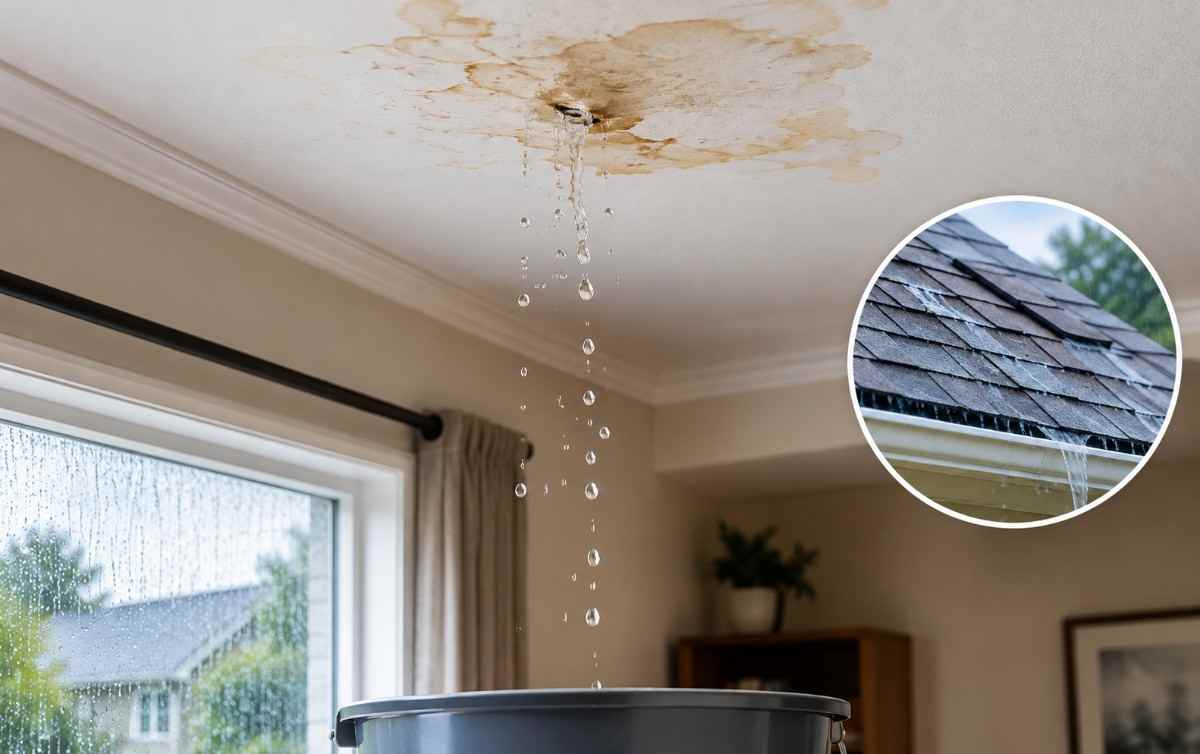
If water is coming through your ceiling after it rains, the most likely cause is water entering through a damaged or vulnerable part of the roof and traveling through the roofing system, attic, insulation, or framing before reaching the ceiling. Common causes include damaged or missing shingles, failed flashing, clogged gutters, roof valleys, deteriorated seals, storm damage, and aging roofing materials. The visible ceiling stain is not always directly below the actual roof leak, so finding the entry point is important before making a repair.
A ceiling leak after rain should not be ignored. Even a small amount of water can contribute to damaged drywall, wet insulation, wood deterioration, and mold if the underlying moisture problem continues.
What Causes Water to Come Through the Ceiling After Rain?
Several roofing problems can allow rainwater to enter your home. The cause may be obvious from the roof, but water can also travel some distance before appearing inside.
1. Damaged or Missing Shingles
Shingles are one of the roof’s primary defenses against rain. High winds, storms, falling branches, age, and general wear can crack, loosen, curl, or remove shingles.
When shingles are damaged, rainwater can reach the underlayment or roof deck and eventually enter the attic or ceiling area.
Look for:
- Missing shingles
- Cracked or broken shingles
- Curling or lifted edges
- Loose roofing materials
- Exposed areas of the roof
2. Damaged Roof Flashing
Flashing is installed around vulnerable roof areas such as chimneys, vents, skylights, walls, and roof transitions. Its purpose is to help direct water away from areas where the roof meets another structure.
If flashing becomes loose, damaged, corroded, or improperly sealed, rainwater can enter through these joints.
This is one reason a ceiling stain may appear several feet away from the actual point where water entered.
3. Clogged or Overflowing Gutters
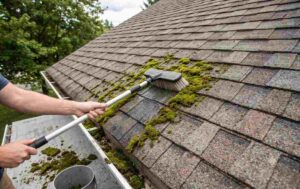
Your gutters are designed to move rainwater away from the roof and foundation. When leaves, moss, dirt, or other debris block the system, water may back up or overflow.
That excess water can reach areas of the roof or exterior walls that are not designed to handle prolonged water exposure.
Regular gutter cleaning can help keep rainwater moving through the drainage system and reduce the risk of water buildup. Silverlining Roof recommends regular gutter maintenance because clogged gutters can contribute to leaks, roof damage, and structural problems.
4. Roof Valleys
A roof valley is where two roof sections meet. Because valleys collect and channel significant amounts of rainwater, they require proper installation and drainage.
Damaged shingles, deteriorated materials, debris, or problems with the valley’s waterproofing can allow water underneath the roofing system.
If your ceiling only leaks during heavy rain, a roof valley or another high-volume drainage area may deserve particular attention.
5. Failed Seals Around Roof Penetrations
Roofs contain openings for plumbing vents, exhaust vents, skylights, chimneys, and other components.
The seals around these penetrations can deteriorate over time. Once a seal fails, rainwater may enter around the opening and travel into the roof assembly.
A leak around a ceiling light, vent, or other interior feature does not necessarily mean that component itself is leaking. The water may have entered somewhere higher on the roof.
6. Storm or Wind Damage
Severe weather can create roofing problems that are difficult to notice from the ground. Strong winds may loosen shingles, while falling branches can puncture or damage roofing materials.
A roof can appear relatively normal from the street while still having a small opening that allows water to enter during the next rainfall.
After a major storm, it is sensible to have visible roof damage evaluated rather than assuming that no obvious damage means there is no problem.
7. An Aging or Worn Roof
Roofing materials naturally deteriorate with age and exposure to weather. As materials become less effective at shedding water, small vulnerabilities can develop in multiple locations.
Silverlining Roof has served the Puget Sound area since 2005 and reports more than 19 years of roofing experience. Its services include roof repair, maintenance, replacement, gutter installation, and gutter cleaning.
Why Does My Ceiling Leak Only When It Rains?
A ceiling that stays dry during normal weather but becomes wet after rainfall strongly suggests that an exterior water source should be investigated.
The timing can provide useful clues:
- Leak during heavy rain: Water volume may be overwhelming a vulnerable area, valley, gutter, or drainage point.
- Leak during wind-driven rain: Water may be entering through flashing, siding-to-roof transitions, or another exposed area.
- Leak immediately after rain: A relatively direct roof entry point may be allowing water into the structure.
- Leak hours after rainfall: Water may have traveled through insulation, framing, or other building materials before reaching the ceiling.
However, timing alone cannot identify the exact source. Water can travel along roof decking, rafters, insulation, and other materials before becoming visible indoors.
What Should You Do When Water Is Coming Through the Ceiling?
Take action quickly, but prioritize safety.
Step 1: Protect the Area
Place a container under active dripping and move furniture, electronics, and other valuables away from the affected area.
Step 2: Watch for Electrical Hazards
If water is near a light fixture, outlet, ceiling fan, or electrical wiring, avoid touching the fixture. Electrical components exposed to water can create a serious safety hazard.
Step 3: Look for a Ceiling Bulge
A swollen or sagging section of ceiling may indicate accumulated water. Keep people away from the area and avoid attempting to puncture or manipulate the ceiling yourself.
Step 4: Document the Damage
Take photographs of:
- Ceiling stains
- Active dripping
- Damaged drywall
- Water around fixtures
- Visible exterior roof damage
Documentation can help a roofing professional understand what happened and where to investigate.
Step 5: Have the Roof Professionally Inspected
Do not assume that sealing the visible ceiling stain will solve the problem. The source of the water needs to be identified first.
A professional inspection can help determine whether the issue involves shingles, flashing, valleys, gutters, roof penetrations, storm damage, or another roofing component.
If the inspection identifies a roofing problem, professional roof repair in Bothell can address the underlying issue rather than simply covering the interior evidence of the leak. Silverlining Roof states that its roof repair service evaluates issues such as damaged roofing and leaks and provides repair solutions based on the condition of the roof.
Can a Small Roof Leak Cause Major Damage?
Yes. A small roof leak can become a larger problem if water repeatedly enters the structure.
Continued moisture may affect:
- Ceiling drywall
- Attic insulation
- Roof decking
- Wood framing
- Interior paint
- Electrical components
- Indoor air quality
The visible stain is therefore only one part of the problem. The more important question is where the water entered and how long moisture has been present.
How Can You Prevent Ceiling Leaks After Rain?
Routine roof and gutter maintenance can help identify vulnerabilities before they become active leaks.
Consider:
- Inspecting the roof after severe weather
- Keeping gutters and downspouts clear
- Checking visible flashing for damage
- Removing excessive roof debris
- Addressing damaged shingles promptly
- Scheduling periodic professional roof inspections
- Monitoring ceilings and attic areas for new stains
Regular roof maintenance can help identify leaks and damage earlier and may reduce the chance of more extensive problems. Silverlining Roof recommends regular maintenance and inspections, particularly after severe weather.
When Should You Call a Roofing Professional?
Contact a roofing professional if water repeatedly enters your home after rain, you see missing or damaged roofing materials, a ceiling stain continues to grow, or you cannot identify where the water is entering.
A professional should also evaluate a leak when the source is unclear. Trying to repair the visible ceiling area without addressing the roof can leave the actual water-entry point untreated.
For homeowners in the Puget Sound area, an inspection can help determine whether the problem requires a localized repair, maintenance, gutter work, or more extensive roofing attention.
Final Takeaway
Water coming through your ceiling after it rains usually means rainwater has found a path through a vulnerable part of the roofing system. Damaged shingles, flashing problems, clogged gutters, roof valleys, failed seals, storm damage, and aging materials are common possibilities.
Because the water may travel before becoming visible, the location of the ceiling stain does not always identify the source. Protect the affected area, avoid electrical hazards, document the damage, and have the roof inspected to determine the actual cause.
For homeowners in Bothell and the greater Puget Sound area, addressing a roof leak early can help prevent a small roofing problem from developing into more extensive interior or structural damage.
Frequently Asked Questions
Why is my ceiling leaking after heavy rain?
Heavy rainfall can expose weaknesses in shingles, flashing, valleys, gutters, or roof penetrations. A small roofing defect may only allow enough water through when rainfall becomes heavier.
Why does water come through my ceiling but I cannot see a roof leak?
Water can travel through the roof deck, insulation, and framing before appearing on the ceiling. The visible stain may therefore be several feet away from the actual entry point.
Is a ceiling leak after rain an emergency?
It can be urgent, particularly if water is actively dripping, the ceiling is sagging, or water is near electrical fixtures. Protect the area and arrange a professional assessment rather than climbing onto a wet roof.
Can clogged gutters cause a ceiling leak?
Yes. Clogged gutters can prevent rainwater from draining properly, causing water to back up or overflow around the roof and exterior of the home.
Should I repair the ceiling or the roof first?
The source of the water should be addressed first. Repairing or repainting the ceiling without fixing the roof leak can allow the damage to return.
How do I know if my roof needs repair?
Visible roof damage, recurring ceiling stains, water entering after rainfall, missing shingles, damaged flashing, and other signs of water intrusion should be evaluated. An inspection can determine the appropriate repair.