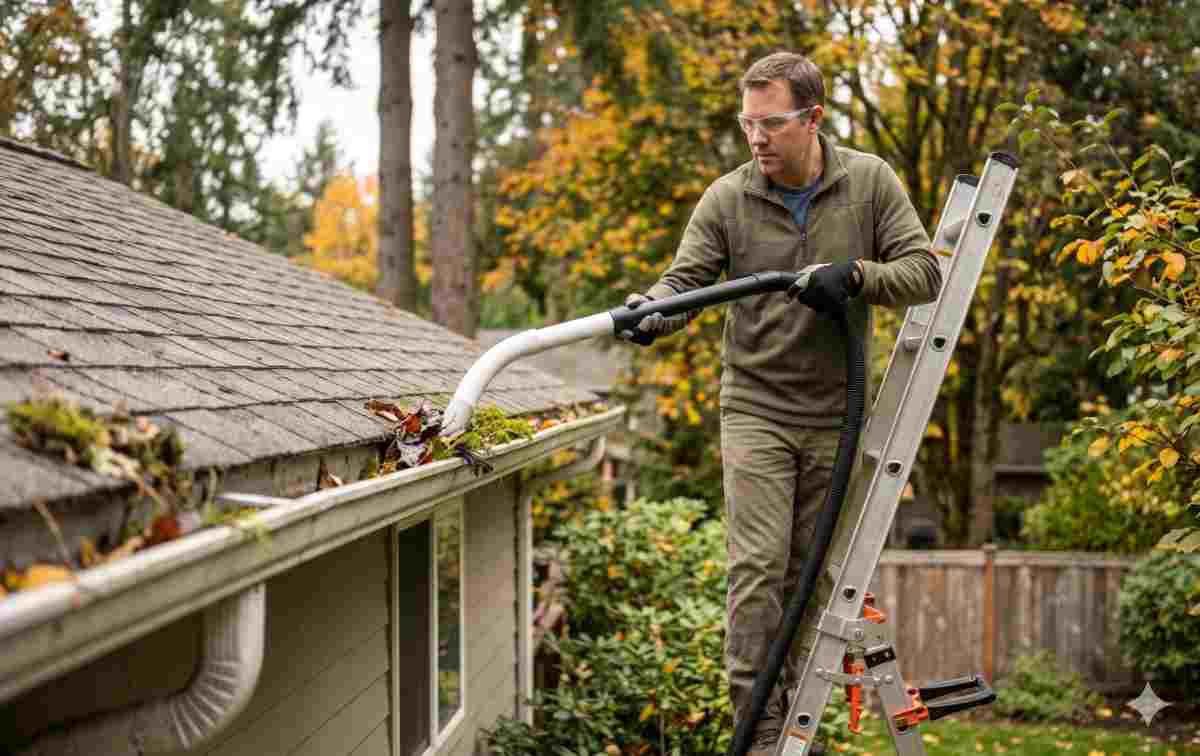
The little-known trick for cleaning gutters more effectively is to remove loose leaves and compacted debris first, then flush the gutter and downspout with a garden hose to check that water flows freely. This two-step method helps prevent blockages from being pushed deeper into the drainage system and reveals hidden clogs, leaks, and drainage problems. For easier maintenance, use a telescopic gutter-cleaning attachment from ground level whenever practical.
Clean gutters help protect your roofline, siding, landscaping, and foundation from water damage. Knowing the right gutter cleaning techniques can make routine maintenance more effective and help you recognize when professional assistance is needed.
1. Why Does This Gutter Cleaning Trick Work?
Many homeowners assume that removing visible leaves is enough to clean their gutters. However, dirt, pine needles, roof granules, and decomposing organic matter can remain inside the channel or accumulate in the downspout.
The secret is to clean the gutter channel and test the entire drainage path, rather than focusing only on what you can see.
This method helps you:
- Remove leaves, twigs, and loose debris before rinsing.
- Identify blockages that are difficult to see.
- Check whether water reaches the downspout outlet.
- Spot standing water, leaks, or possible drainage issues.
- Reduce the risk of recurring gutter clogs.
A garden hose is generally suitable for the final rinse. Avoid excessive water pressure, which may damage gutter sections or force water beneath roofing materials.
How to Clean Gutters Step by Step
Follow a systematic approach to remove debris and check drainage.
Step 1: Inspect the Gutters
From the ground, look for overflowing sections, sagging gutters, loose brackets, visible cracks, and plants growing inside the channel. Choose a dry, calm day for any necessary outdoor maintenance.
Step 2: Remove Leaves and Debris
Use an appropriate gutter scoop or extension tool to remove leaves, twigs, and accumulated material. Collect the debris instead of allowing it to enter the downspout or fall into landscaping.
Step 3: Check the Downspout
A clean-looking gutter can still drain poorly if the downspout is blocked. Check the outlet and look for signs of restricted flow. Stubborn blockages may require specialized equipment or professional assistance.
Step 4: Flush With a Garden Hose
Once the loose debris has been removed, use a gentle stream of water to rinse the gutter. Observe whether water travels toward the outlet without pooling or overflowing.
Step 5: Test the Drainage System
Check that water exits the downspout and discharges away from the home’s foundation. If water backs up, drains slowly, or leaks through joints, investigate the cause rather than repeatedly flushing the same blockage.
Can You Clean Gutters Without Using a Ladder?
Yes. Telescopic gutter-cleaning tools, hose attachments, and suitable gutter vacuums can help remove debris from the ground.
These methods are particularly useful for accessible, single-story gutters with loose leaves and light debris. However, they may be less effective against wet, compacted material, stubborn downspout clogs, or hidden structural problems.
For multi-story homes, steep rooflines, difficult access, or gutters near overhead electrical wires, hiring trained professionals is generally the safer option. Never climb onto a roof or lean beyond a ladder’s safe working position to reach a gutter.
Common Gutter Cleaning Mistakes to Avoid
Even a simple maintenance task can cause problems when the wrong method is used.
Avoid these common mistakes:
- Skipping the downspout: Debris can remain trapped even when the gutter looks clean.
- Using excessive water pressure: Strong spray can damage gutters or force water beneath roof edges.
- Ignoring leaks: Loose joints, cracks, and sagging sections may need repairs.
- Cleaning in unsafe weather: Wet, windy, or icy conditions increase the risk of falls.
- Forgetting debris disposal: Leaves left around drains and foundations can create additional maintenance problems.
- Waiting until gutters overflow: Routine cleaning can help prevent severe blockages and costly water damage.
When Should You Hire Professional Gutter Cleaners?
DIY gutter cleaning may be manageable for accessible areas, but professional help is worthwhile when the job involves significant height, persistent blockages, difficult access, or suspected gutter damage.
Experienced gutter cleaners can help remove accumulated debris, assess drainage performance, and identify visible problems that may need further attention.
Professional gutter cleaning is particularly useful when you cannot safely reach the gutters, repeated clogs occur, or water continues to overflow after cleaning.
Frequently Asked Questions
What is the easiest way to clean gutters?
Remove loose debris first, then flush the gutter and downspout with a garden hose to verify proper drainage. Telescopic tools can make ground-level cleaning easier.
Does vinegar clean gutters?
Vinegar may help with some surface grime, but it does not replace removing leaves, clearing blockages, and checking water flow. Avoid applying cleaning solutions without confirming they are compatible with your gutter materials.
Can clogged gutters damage a house?
Yes. Blocked gutters can cause water to overflow onto siding, fascia, landscaping, and areas near the foundation. Persistent moisture can contribute to deterioration and other water-related problems.
Is professional gutter cleaning worth it?
Professional service can be worthwhile for multi-story homes, stubborn clogs, difficult rooflines, and homeowners who cannot safely access their gutters.
Final Thoughts
The most useful trick for cleaning gutters is simple: remove debris before rinsing, then test the gutter and downspout together. This approach helps reveal hidden blockages and confirms whether water can drain properly.
Combine this technique with regular inspections and seasonal maintenance to help protect your home’s drainage system. If the gutters are difficult to reach or continue to overflow, consider professional gutter cleaning before a minor blockage becomes a larger maintenance issue.